Princess Micomicona
Don QuixotePrincess Micomicona is the chivalric identity adopted by Micomicon princess Dorothea, a wealthy farmer’s daughter whose own misfortune gives her a reason to flee and whose command of romance gives her a way to act. Her transformation from a vulnerable fugitive into a resourceful participant in the plan to bring Don Quixote home makes her a striking counterpoint to the knight: she understands the conventions he mistakes for reality and can use them deliberately.
Identity and Background
In her account, Dorothea is the only child of prosperous but humble parents in Andalusia. They are vassals of a duke, and she describes them as old Christians whose wealth and generous way of life have gradually brought them the standing of gentlefolk, though their birth remains modest. Their daughter is the principal object of their hopes and affection. She manages the farm’s accounts and produce, including its olive mills, wine presses, flocks, herds, and beehives, and directs the household’s workers. This responsibility makes her more than a protected daughter: she has practical authority within the estate and understands the material basis of her family’s position.
That position is socially complicated. Dorothea’s family has wealth but not noble birth, while Don Fernando belongs to the household of a duke. In her telling, the difference matters because she fears that his rank and power may be used to override her wishes. Her story places personal honor, marriage, lineage, and economic standing in the same field of pressure; her parents’ prosperity gives them resources, but it does not erase the disparity between their daughter and a nobleman who pursues her.
Don Fernando and Her Claim to Honor
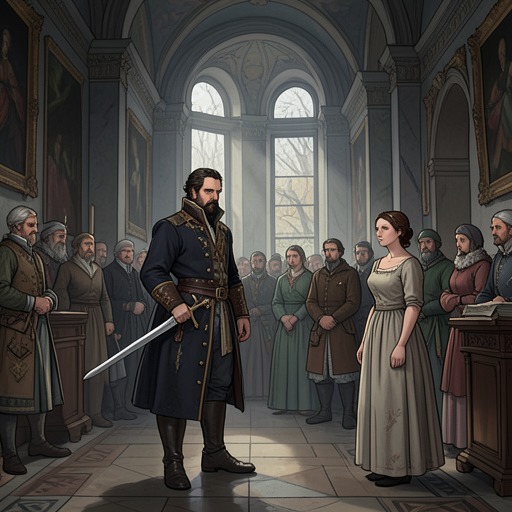
Don Fernando courts Dorothea through household servants, gifts to her parents, public festivities, music, and repeated letters. She acknowledges that his attention gives her some satisfaction, but says her sense of right and her parents’ counsel prevent her from encouraging him. Her parents warn that the difference in their rank makes his promises suspect: they fear he seeks his own pleasure rather than her welfare. They offer to arrange a marriage with someone she chooses, and Dorothea refuses to give Don Fernando even the smallest hope of success.
When Don Fernando gains access to her private room, Dorothea insists that being his vassal does not make her his slave. She argues that humble birth does not deprive her of self-respect and that neither wealth nor rank gives him the right to dishonor her. She distinguishes between a lawful husband, to whom she would willingly give herself, and a man seeking to obtain her consent through pressure. Don Fernando then pledges his hand in marriage, calling Heaven and an image of the Virgin as witnesses. The pledge becomes part of the account of her misfortune, but the evidence presented here does not establish its later fulfillment.
By the time she tells her story to the curate, the barber, and the Knight of the Ragged Countenance, Dorothea says she fears being discovered by those searching for her. Though she believes her parents would receive her kindly, shame at facing them in the condition they had not expected makes her contemplate remaining away from them. Her distress is therefore bound not only to what Don Fernando has done but also to the public and familial expectations under which she understands her honor.
The Princess Micomicona Disguise
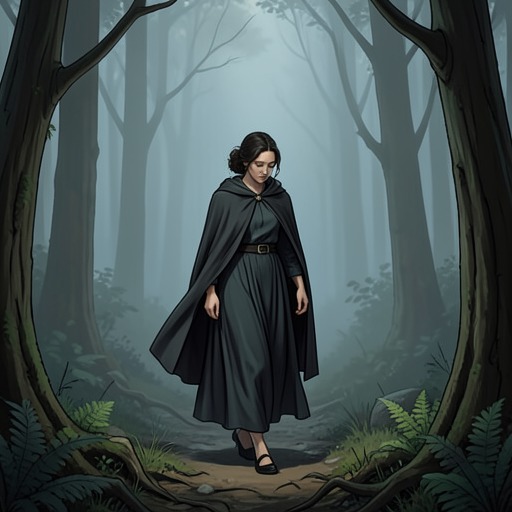
Dorothea’s fortunes intersect with the effort to bring Don Quixote out of the Sierra Morena. Sancho Panza reports that the knight, stripped to his shirt and weakened by hunger, refuses to leave until he has performed deeds worthy of his lady. The curate explains the plan to take him home, and Dorothea offers to play the distressed damsel herself. She has read many books of chivalry and knows how such a woman is expected to appeal to a knight-errant; her proposal turns literary knowledge into a practical instrument.
She has brought suitable clothing and ornaments from home in a pillow-case. With a rich petticoat, a green mantle, a necklace, and other decorations from a small box, she quickly presents herself as a great lady. The disguise is thus materially prepared, but its force depends on performance: Dorothea knows the genre’s gestures and language well enough to make the role persuasive. Sancho, like his master, is taken in by the appearance she creates.
When she begins the invented account, she briefly forgets the name assigned to her. The curate supplies it: Princess Micomicona, lawful heiress of the kingdom of Micomicon. Dorothea resumes the story and presents herself as the orphaned daughter of King Tinacrio the Sapient and Queen Jaramilla. Her father, she claims, foresaw that the giant Pandafilando of the Scowl would invade her kingdom after his death and that she would have to seek a knight’s help. She rejects the prospect of marrying the giant. The threatened inheritance and the endangered subjects give Don Quixote the kind of adventure he is prepared to accept, while Dorothea’s own knowledge of chivalric books lets her shape the appeal to his expectations.
Narrative Role and Significance
Dorothea occupies two connected roles: she tells a painful personal history and then invents a romance plot to influence Don Quixote. The contrast is not simply between truth and falsehood. Her account of her own circumstances explains the vulnerability and social constraints from which she is acting; the fictional princess’s predicament is a purposeful device devised to meet an immediate need. Her quick shift between these modes shows her ability to interpret other people’s expectations and turn them to practical use.
Her character also complicates the social hierarchy invoked in her story. She is a farmer’s daughter who manages substantial property and speaks firmly against the assumption that a nobleman’s status gives him authority over her. At the same time, she can acquire the appearance of a high-ranking lady through clothing, ornaments, and practiced performance. The episode makes visible both the force of rank and the possibility of manipulating its signs. Unlike Don Quixote, who takes romance for reality, Dorothea knowingly stages romance so that his mistaken understanding may help return him home.